Measuring Trading-System Performance
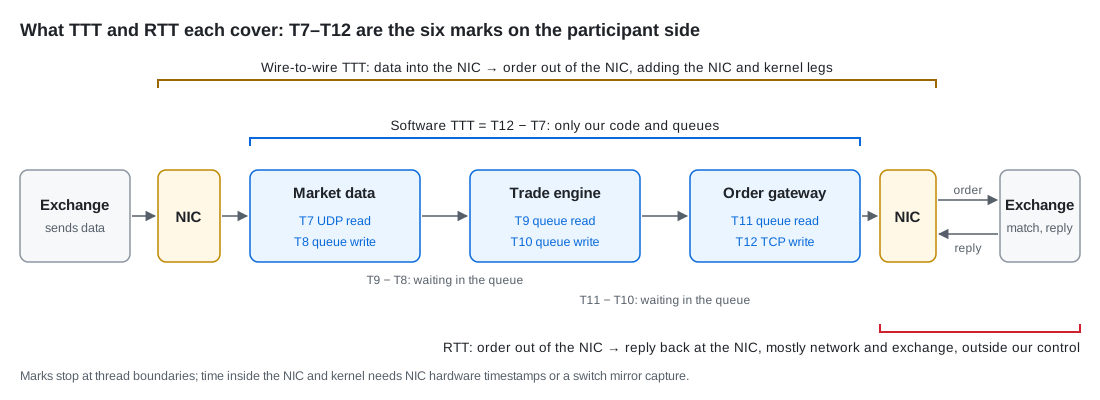
What TTT and RTT each cover, why to report p50, p99 and p999 instead of the mean, how marks at thread boundaries separate processing from queueing, and how to use the latency table as a budget.
Tags
3 posts
What TTT and RTT each cover, why to report p50, p99 and p999 instead of the mean, how marks at thread boundaries separate processing from queueing, and how to use the latency table as a budget.
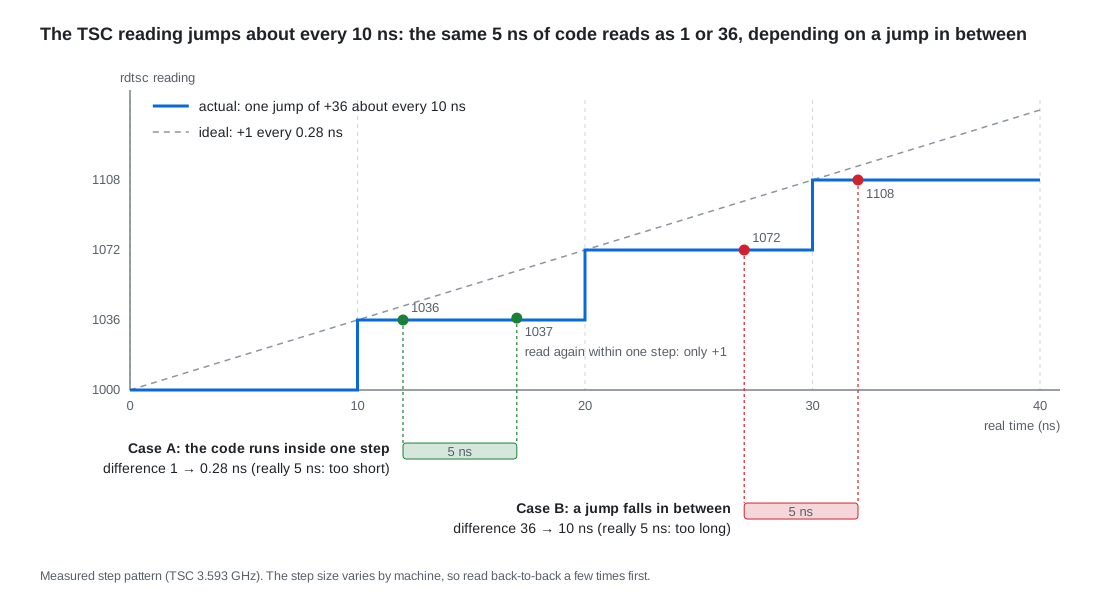
What a TSC reading means, when it is taken, which core it is taken on, how to record timestamps on the hot path, and how ticks become ns: where the frequency comes from and how to calibrate it yourself.
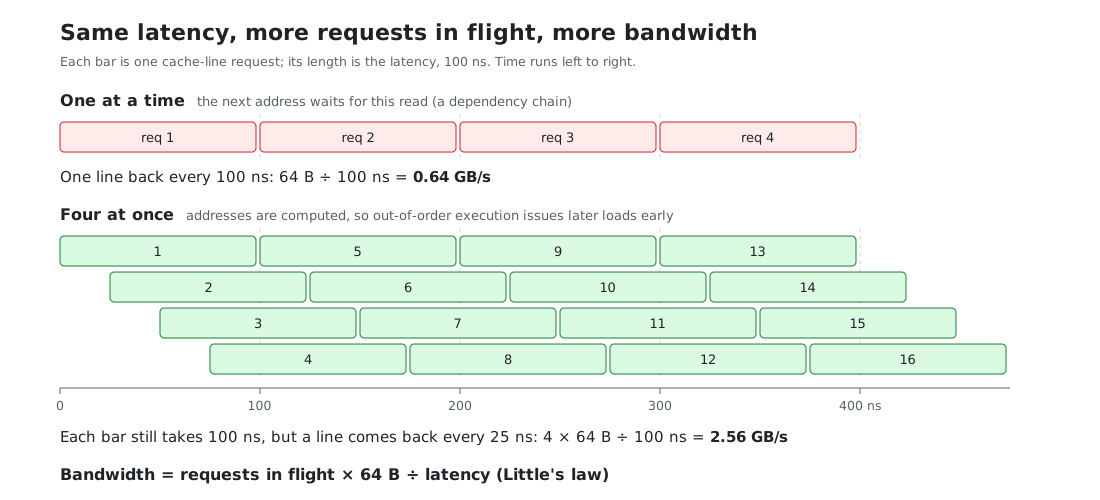
One memory access takes about 100 ns and brings back 64 B. One at a time, that’s 0.64 GB/s, yet one core reading sequentially gets 15–60 GB/s. The missing factor is the number of requests in flight. Whether the next load’s address …